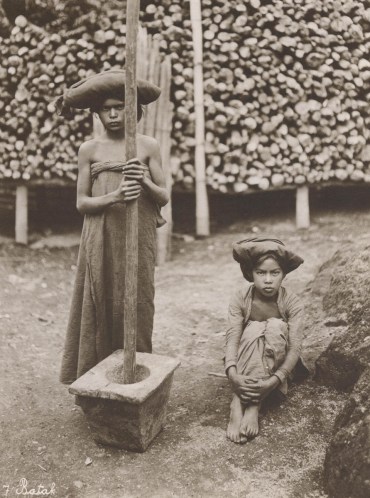
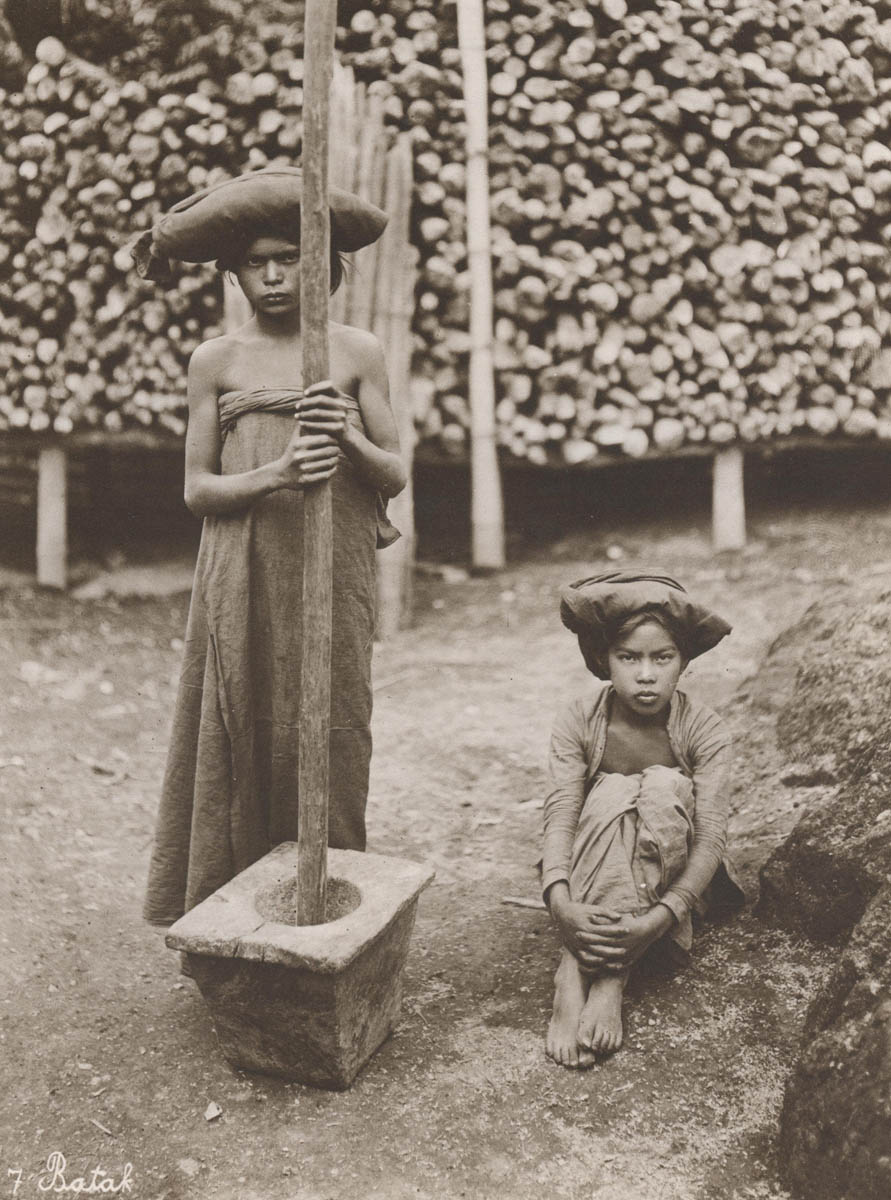
(c) Walterwoodbury & James Page
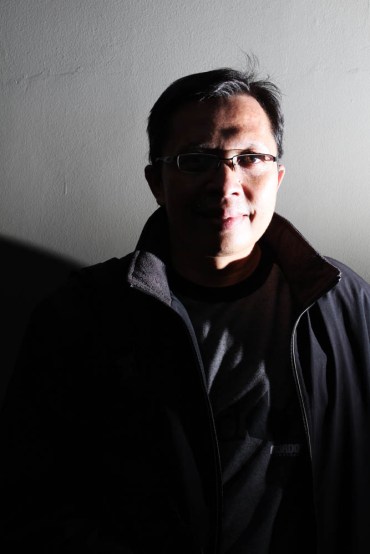
Yudhi Soerjoatmodjo
At every stage of its development, the challenge to define space – material, emotional, structural and creative -has always been the principal motive of photography practice in Indonesia.
When photography first entered the archipelago in the nineteenth century, space was embodied by the colonized land itself, a physical entity to be mastered, described, quantified and altered. During the struggle for independence, that contrived space came to signify mankind’s past isolation from his fellow man, as photographers of the young republic unveiled new dimensions in their records of people and events. In the economy driven 1970s and 1980s, photographers embraced the structured professionalism of modern corporate organizations, and the gridlined space of print media became the paramount form of presenting creative work. Today, the word “‘space” would imply contemporary photography movement to make room, through the establishment of alternative spaces, for broader communal exchange.
Whatever the case, the concept of space is inherent of the medium itself. Perhaps, it was no mere coincidence that the Dutch Ministry of the Colonies, whose primary concern was surely the appropriation of more territories, was one of the first to grasp the potential power and application of photography. At the order of this office, the first Daguerreotype arrived in the ancient capital of Batavia in 1841, a mere two years after the camera’s invention in France. It was promptly transported to Central Java, with the specific mention for it to be used to “collect photographic representations of the principal views, etc. and also of plants and other natural objects.”
Although that experiment ended in failure, by the 1850s the concept of photography as an inventory tool was firmly in place. The methodical mapping of the colony through the aid of photography was on its way. Over the next three quarters of a century, this determined not only the reality of its practitioners -which included missionaries, court officials, military officers, and sometimes the adventurous and the dispossessed- but also the sort of images that were generated, and the functions they served. Furthermore, the way the images were circulated and presented to the public, propagated a particular philosophy of aesthetics which still affect us today.
To illustrate these points, first we need to scrutinize the life and work of several notable photographers of the period.
One of the most important and prolific studio was perhaps the studio of Woodbury & Page. It was founded by a pair of Englishmen of the same name, who had relocated to the Dutch-Indies after their earlier attempt to struck gold in Australia had ended in vain. They then revived their first love of photography and, in 1857 in Batavia, established the photo firm which would survive until the early 1900S. Besides working on government commissions and producing portraits for wealthy clienteles, a considerable amount of their flourishing business came from the sale of individual photograph and carte-de-visite. These images of land and people were meant to be collected in souvenir albums, a favorite pastime of colonial sojourners.For these reason they traveled extensively through the outermost regions of the archipelago, photographing nobles and commoners as archetypes. Consequently, Woodbbury and Page furthered the concept of conquering the land by conquering its image, in which:
“fierce -looking savages with their clubs, spears and poisoned arrows, no longer represented a threat to the Europeans…Now they simply functioned as exotic trophies for the cameras of professional photographers.”
Contemporary historians considered the Javanese Kassian Cephas (1845-1912) the first native photographer. He was an exceptional figure, given the fact that until the beginning of the twentieth century the photography profession were virtually in the hands of Europeans, a few Chinese and Japanese. More extraordinary was his ability to serve and traverse the two worlds of East and West with grace and skill. He served the Sultanate of Yogyakarta as court photographer and painter from the early 1870s. In association with the king’s Dutch physician, Cephas also had his commissioned photographs published in several important portfolios. As servant of the court and an amateur archaeologist, Cephas’ photographs of the Sultan’s family, the sacred ceremonies of the court, the royal theatrical performances or even the ruins of Hindu-Javanese temples were “not images expressing individuality but images representing dignity.” Essentially, their charm rest in the mysterious quality which surround them. In a portrait of a person, it might be the headdress, jewelry, flower arrangements, the motif of the batik cloth, and even the positions of the hands and feet.” In retrospect, it is precisely because of these characteristics that his photographs have become examples of the subliminal, but nonetheless, violent invasion of one dimension by another: the demystification of the country’s present by stereotyping its past, reinforced by contrasting the great achievement of the past with what was regarded as the low level of the contemporary culture.
No such contradiction spoiled the work of Indonesian photographers during the nation’s struggle to defend its independence (1945-49). In fact, the first photograph made by a citizen of Indonesia occurred at the exact second the nation declared its existence. Sometime after 10 o’clock in the morning of August 17, 1945, the Indonesian photographer came into being with the click of his shutter.
Frans Mendur (1913-1971), along with his older brother Alex, attended the proclamation of Indonesian independence and took the photographs that had become icons of the nation’s modern history. As reporters they knew about Hiroshima and Nagasaki’s devastation by atomic bombs, and realized that this would have significant repercussions in the former Dutch colony, then still under Japanese occupation. In the confusion of its imminent defeat, the authority lost its grip on the country. Nationalist leaders took advantage of the situation and quickly declared the establishment of the Republic of Indonesia, thus, preventing the Dutch from recovering their lost territory.
Within days of those momentous happening, Indonesian photographers would reclaim the space which had been denied from them for centuries, to record and to see their own faces as free men. They gave the country a new presence, and showed a new dimension in the relation between its people. The Indonesians were no longer portrayed as murky shadow crouching at the feet of white-clad European masters, a typical image of colonial times, but as distinct human beings. The Indonesian cameramen photographed up-close, conferring the same proportion to the common people as to its leaders and capturing them in the same frame, emphasizing their equal status. They discarded visual artifice which had been used in the previous century to imply dignified and reserved distance. Almost every frame in their photographs was bursting with noise, gestures, and the jostling, expectant faces of the ordinary Indonesian people, and made an extraordinary impression because of the14 honest and direct manner in which they were taken.
Finally, with no one to command them, no visible funding and almost no equipment, the Indonesian photographers reorganized themselves. In the first week of September 1945, young Indonesian photographers at the Jakarta and Surabaya offices of the Japanese news agency Domei established the photo department of the revived Antara news bureau. Alex Mendur (1907-1984), who had been the Domei’s chief of photo, joined Merdeka, the country’s first independent newspaper which his brother Frans had helped establish. A year later they founded IPPHOS with their old friends before the war, the brothers Umbas.
Three factors contributed to their achievements. Regarding their new-found aesthetics, the Indonesian photographers had the benefit of modern technology which enabled them to make and develop photographs in the most difficult conditions. Furthermore, the small camera eliminated the spaced distance so characteristic of the large view camera of the past. Some of the most important images of the period, the photographs of the proclamation for example, was made with the compact Leica camera. It uses the roll film’, which was easy to smuggle, a very important point in times of war, and permitted the photographers to quickly capture different nuances and sequence of an event.
Second of all, as the Indonesian leaders had no administrative experience in running a country, the Republic “depended on ideology and rhetoric as the sole instrument to maintain law and order.” Images that conveyed solidarity and harmony among the people promptly received moral and financial support from the government. Antara, formerly an independent news agency, was later installed under the Ministry of Information. IPPHOS remained autonomous, but relied on the Indonesian Prime Minister and other officials traveling on special trains to smuggle20 films in and out of conflict areas.
The third, and most important dimension, is the photographers’ professional and political background prior to the independence. In the nineteenth century, the professional photographer was principally a commercial photographer with his or her own studio. In contrast, the photographers of Antara and IPPHOS were journalists from their earliest careers. This is an important distinction. Working for the media, even ones that were controlled by the enemy, gave them the access to see the true condition of the country, to converse with future leaders of the nation and, thus, the opportunity to develop a critical point of view.
The Antara— photographers, for example, had been young and ingenuous recruits at Domei, in the last and most brutal years of the Japanese invasion. There, they not only received formal photography course by a special instructor from Japan, but also came in contact with senior reporters who had been the founders of Antara, a pre-war news agency supportive of the national movement. As photographers for a Japanese news bureau, they had the license to make photographs and, more important, to travel the lan ‘ d. What they saw was a country wrecked by extreme poverty and starvation, made worst by the severe martial law of a foreign power. For them, the decision to join the independence war, and to join Antara, was a simple choice.
The founders of 1PPHOS, on the other hand, had the example of their mentor Anton Najoan (1896-1933). In the rigid structure of the colonial society, Anton had achieved social and professional respect as photographer for Batavia’s preeminent press, the Java Bode. Yet, he refused to have his status as a native gelijkgesteld, legally changed to the equivalent of an European. Furthermore, Alex Mendur’s apprenticeship with Najoan at the age of fifteen in 1922, coincided with the inflow of other regional youths pursuing professional studies in the capital’s higher institutions. Alex spent ten years building his career in Batavia -from the famous studios of Luyks and Charls & van Es & Co., to the position of photojournalist at the Java Bode daily newspaper and Wereld Nieuws en Sport in Beeld magazine. In the same ten years he witnessed these different groups come to the realization of their common language, identity, and destiny as people of one Indonesia. All the while, his brother Frans had become a political fugitive. He had escaped the Dutch Intelligence in the island of Bali and went into hiding in the eastern port city of Surabaya, masquerading as a cigarette vendor. He was adopted by a salt merchant, became a Muslim, then reunited with his brother in Batavia. There, he found temporary refuge in the proverbial lion’s den, working for the Java Bode. Nonetheless, when war came to the Pacific, their friend Justus Umbas was thrown in jail, along with other nationalists leaders who had refused to cooperate with the Japanese authority. Alex and Frans Mendur were promptly drafted by the invading army to make propaganda pictures for Domei, Asia Raya and the Djawa Shimbun Sha.
Having fought for so long on the front-line of high idealism and pragmatic professionalism, IPPHOS images instead spoke of tolerance, dignity and respect for all things human. Their founders’ multitudinous experiences had made them view life in broader dimensions and had become not only the source of their nationalism, or of the breadth and width of their photographs, but also of their strong independent character.
It was much the same front-line and principle that photographers fought for in the 1970s and 1980s. The difference was that the war had shifted from the combat zone of yore to the mock-up room and printed page of the magazines and newspapers. As editorial staff became entrenched in their divisional structure, photographers had to battle writers and designers for the picture’s rightful and proportionate place in the papers.
Therefore, the contemporary readers may want to re-read the first chapter of Mat K6dak (Ed Zoelverdi, 1985) as an amusing text on the art of compromise. The book, one of the very few published in Indonesia on the subject of photography, was quite popular among aspiring journalists and the general public. For a time, its title had even become the layman’s term for the photography profession. Using clever analogy that compared editorial operation to cooking process, and pictures to dishes, Ed Zoelverdi stressed the importance of collaborative work in the newsorganization.
Mat Kodak was, however, written as a hindsight. It was, in a way, Ed Zoelverdi’s reflection on his success and failure as’ the first picture editor at Indonesia’s top magazine Tempo. When the book was published, the Indonesian economy was revving up, and newspapers and magazines were just about to reach their peak in terms of circulation and advertising revenue. The use of photography in the press was at its all time high. But it was going nowhere. A decade worth of exciting adventure – in creating and editing pictures, in thinking about the problem of montage of text and images, in designing the printed page -was slowly running out of steam. Like anywhere else, as publications became larger and successful:
“they became increasingly dependent on a rational bureaucratic structure … The photographer would no longer be a loose canon in the corridors of history, but a disciplined member of a team, whose collaborative effort would be directed and edited by men in positions to see and understand the larger picture.”
Money drove the country in the 1970s and particularly in the 1980s. Two decades of political experiments and demagoguery had culminated in the failed communist party coup of 1965 and its bloody aftermath. Afterwards, the search for the higher disposable income would replace politics as the nation’s highest commander. Despite widespread illiteracy and a tattered economy, but in the absence of a strong electronic media, newspapers and magazines were told to compete not for the heart and soul of the populace, but for their pockets and wallets.
Thus, the transformation of the press into the modern corporate organization. What the industry lacked in experience and formal training, however, it more than made up by the talent and youthfulness of its practitioners. Tempo magazine, for example, was established in 1971 by poets, student activists and painters in their twenties and early thirties. A few years later, the Femina women’s magazine would be founded and run by a family with one of the strongest pedigree of intellectualism and culture in the country. And in their picture desk, a novel breed of hired people: the full-time staff photographers.
Unlike in the West, the growing prominence of print media did not stimulate the photo agencies. On the contrary, it merely coincided with their receding importance. After the failed communist coup of 1965, Antara was purged and their photo archive incinerated. The agency would not have a proper photo bureau again until the early 1980s. IPPHOS was spared this ordeal thanks to its independence, but by then, the family run management wasn’t doing well. Thus, in the absence of proper photography formation (the first photo school would not be established until 1992 at the Jakarta Institute of the Arts), in the beginning of the 1970s photo departments would be manned by a different kind of cameramen. People such as Ed Zoelverdi (1943-), who had started his career making illustrations and caricatures in various publications, and had even studied painting with two of the country’s most prominent artists. He tried his hands writing news and at the mock-up desk, before joining Tempo in 1975. Another example, was his chief competitor at the Kompas daily, Kartono Riyadi (1945-), who taught himself photography in 1965 from reading Popular Photography at Jakarta’s second-hand book stalls. He studied architecture and took night course at the film academy, none of which he completed. He entered Kompas in 1971 and was only recently retired after holding the position of its first photo editor for fifteen years.These were the new generation of the nearly artistic, the autodidacts, the reticent visual genius, and the graphic school and film academy drop-outs.
In the early days, however, their lack of formal training was the source of the magazines’ and newspapers` enterprising look. Working in a loosely structured organization and relying mostly on intuition, photographers, writers, and art directors would liberate text, image and space from their previous unequal status: all became important and none was sacred. Particularly in the magazines this concept was furthered by designers and picture editors, who were inspired by the flexibility of the photomechanical reproduction as a way to circumvent the paucity of photography equipment and the low quality of the paper used in most publications. They would place an extremely cropped photograph to create an illusory stretching of the dimension of the page, sequenced the same suit of pictures to convey motion and time, collaged found and created images to unfold an association of meanings, and even took advantage of the printer’s one-dimensional blacks to emphasize moods. Thus, the message of a story was defined as much by the form and composition of the text, images and space on the page, as it was by their content.
Unfortunately, what made the system work in a small and innovative environment became its undoing once papers became more commercially ambitious. Since the government limited advertisements to only 35 % of a publication’s content, newspapers and magazines would push for more editorial pages as a way to proportionally increase their advertising space and revenue. Consequently, designers, picture editors and photographers could no longer treat each page and each article as an individual problem requiring unique solution. When an edition of Tempo reached over 100 pages, for instance, its newsroom operation resembled the assembly line principal, with photographers and designers positioned somewhere at the middle and very end of the conveyer belt. Furthermore, the magazine’s design was standardized: one page equals a body of text plus two columns of a rectangular photograph. A picture became something to fill-in leftover space after the rest of the page had been completed with title and text.
Nonetheless, in the mid-1980s there were half-hearted attempts to give more room for photography. Tempo had “Kamera,” a four-page section that presented or reinterpreted feature stories in the form of photo essay. It was a success and, in 1991, Tempo’s readers even voted it the sixth most popular rubric out of a selection of twenty-seven. Other print media follow suit and, thus, well until the early 1990s, newspapers and magazines continue to be regarded as the best place for photographers to first establish their reputation. Consequently, some of the era’s strongest images – be it press or commercial or fashion -were originally seen on the back covers and special sections of Kompas, Tempo or Femina. These easily available pictures, in turn, became the inspiration for many aspiring photographers.
For a while, there arose the optimism that the printed page was becoming the photographer’s canvas, gallery wall and classroom all at once. Unfortunately, in the long run it merely resulted in photographs and their photographers being viewed by the general editorial staff as esoteric, and further isolated the medium from the other components of newsprint. The placement of photographs in an exclusive space such as Tempo’s “Kamera” instead diverted photographers’ attention and energy from the other sections of the magazine, which in actuality were the true battle zones. In fact, the gridlined page simply had become the ghetto of the second class citizens of the art world and print journalism. When papers scaled back their publications in the mid-1990s, the special photo pages were the first to be exterminated.
And outside of the covers, the earth may as well be flat. In the beginning of the 1990s, Indonesian professional photographers abruptly woke up from their illusion, only to discover that the rest of their world was a barren land -in fact, had been forsaken for almost 150 years. Beyond the bound pages of newspapers and magazines, they had no other recourse to create and publish their work. No gallery or museum that exhibits and sells photographs. No curator and almost no art critic to explain and give meaning to the images. No monographs or catalogs, and hardly any reviews from which one can trace the development of the medium. No school or workshop that serves as a laboratory of exchange and regeneration. No communities that give moral and financial support. They only had the pictures in the papers-cheap, democratic, and accessible to a very wide audience, but unfortunately also disposable and, thus, often forgettable.
Like anywhere else, photography’s ambiguous status as an art form might be to blame for this paucity in infrastructure. But in the Indonesian context it was exacerbated by two significant difficulties. For one, there was the former New Order government’s emphasis on the physical and commercial development of the country. For over thirty years culture and art were packaged in terms of their monetary potentials. For state-run museums and cultural centers this had m6ant being stuck with the historic and the curios, as these were what the foreign tourists wanted to see. Meanwhile, in the economic boon of the 1980s, commercial galleries made painting their prima donna because its prestige and inflated price appealed to the local nouveaux-riches’ obsession with the exclusive and lucrative. Consequently, neither of these places would dream of opening their hallowed corridors to something as unclassifiable and common as photography. As for education, because photography had always been perceived as a practical sort of profession or craftsmanship, it was not significantly represented either in the curriculum of art schools or in the universities.
The second dilemma was the singularity of the medium’s history in Indonesia. In previous sections this has been examined from the perspective of social backgrounds, photographers` aspirations, and thematic choices. At this juncture we need to give further emphasis to the manner in which photography had been circulated and presented to the public, since the nineteenth century until recently. That is to say that for over a century and a half, photography in the archipelago had been made for the predominant purpose of placing and arranging them between two covers, to be read not as photography but as accompanying illustrations in special edition portfolios, souvenir albums, science and history text books, and ultimately newspapers and magazines.
A case in point is that although the Netherlands had exhibited38 photography as fine art since the 1860s, there is yet little evidence to support that its colonial counterpart in the Dutch-Indies had similar consideration. Even when at the end of that period the railway hung photographs in its carriages and the photo store Charls & van Es & Co. had their own exhibition space, it would still difficult to argue that the photographs were shown as anything more than to illustrate some scientific, political or trade-related purpose. The irony was that this was true also of the photographs of Antara and IPPHOS, and truer still of the prosperous recent times. Until 1992, the only consistent and continuous photo exhibitions in town would have been the soft-focus portraits of aspiring models pinned to the walls of photo studios and print-processing labs. Of course, there was the Salons of the amateur photography clubs which had been exhibiting the work of their members as early as 1923. Unfortunately, since the audience had always been exclusively from their own milieu and the shows restricted to once a year in the clubhouse, their influence as a whole was always limited.
Then, in the middle of 1992 the Jakarta Institute of the Arts became the first in the country to finally upgrade its photography classes to a major study, capitalizing on the growing demand for professionally educated photographers, especially in the commercial and journalism field. In September, the independent curator, Jim Supangkat launched his ideas on contemporary art and post-modernism by organizing the Jakarta Art and Design Expo 1992 that not only included recognized masters and new artists, but also showed everything from oil painting to steel settee and photography. Furthermore, the exhibition displayed images by five prominent photographers, each representing a major photography approach (Firman lchsan, fashion portrait; Fendi Siregar, fine art; Yudhi Soerjoatmodjo, documentary; Tara Sosrowardoyo, travel; and Darwis Triadi, glamour photography) which hitherto the general public had never seen together in the same room, let alone in the presence of other art work. By the end of the year, Antara revived its once neglected historic office in central Jakarta, and thus its corporate image, by inaugurating the Galeri Foto Jurnalistik Antara, “the first public gallery in Asia, devoted exclusively to photography,” on the building’s main floor.
Within the next seven years, however, these seemingly unrelated events would profoundly transform the stature and practice of Indonesian photography. One reason is that, in addition of having occurred almost concurrently, the heterogeneity of activities resulting from each organization’s particular objective actually contributed in the ventures reaching a wider and more diverse audience than would have been possible with a single institution or individual. Over time, they would even be thought of as one integrated movement.
Furthermore, like most successful projects in a developing country, they were the initiatives of private and semi-private organizations that had the wisdom to back their endeavor by using professionals from outside their usual bureaucratic structure. The Galeri Foto Jurnalistik Antara, for example, was one of the first public gallery to employ a full-time curator with extensive autonomy to develop programs and raise funds, something that is still not conceivable in present day state-run museums. The Jakarta Institute of the Arts photography course was headed and taught by what Szarkowski had earlier observed in the United States as “a new class of photographic role model: photographers who were famous.” Consequently, their genuine success encouraged other enterprises. In 1994, the Indonesia Institute of the Arts in Yogyakarta would establish a Bachelor’s degree in photography. Three years later the number of universities and academies in the island of Java offering various photography diplomas had more than tripled. Meanwhile, Jim Supangkat’s commitment to establish photography within contemporary art resulted in the medium being included, for the first time, in the prestigious the 9th Biennial of Contemporary Art, Jakarta 1993~94. The controversy of this move, thereupon, would further photography’s status as a cause-celebre among current artists and curators and ensured its presence in alternative international venues.
More important, however, is the non-elitist stance of the forerunners. The Galeri Foto Jurnalistik Antara is a good example. It’s founding was motivated as much by Antara’s business strategy to overhaul its past image as a conservative quasi-government agency, as it was by a social commitment for the rejuvenation of photography and general culture in the country. This was underlined by its not-for-profit status and vigorous activities which emphasizes educational and out-reach programs for young people and the common public. Consequently, 60% of its annual visitors categorized themselves as “ordinary citizens!’ The 40% who are photographers came from every field of practice, an interaction that would have been inconceivable even a few years ago. Out of the total, 90% are grouped in the nineteen to thirty years old age bracket, 50% of which have monthly disposable income of less than Rp. 300,000 (US$ 45 or V4,500 at the current rate).
It follows that in this kind of environment, photography functions simultaneously as visual communication and art object. For this reason, speakers at the Galeri Antara have included anthropologists, fiction writers, sex workers, architects, and philosophers beside internationally renowned photographers. Consequently, this practice has managed to steer photography away from the modernist pitfall of western experience where art museums and archives had reduced “the formerly plural field’,46 of photography … to the single, all encompassing aesthetic. Instead, as have been predicted by Photo Asia as early as 1994, photography in today’s Indonesia continues to be “very much part of society,” serving the purpose of knowledge and information as well as artistic expression.
Somehow, this elicited a sympathetic response from the Indonesian general public. As proof: despite the non-existence of any kinds of art endowments and art market for photography in Indonesia, but perhaps as a public rebuttal to this situation, 84 % of the Galeri Foto Jurnalistik Antara’s funding actually came from membership subscription, corporate sponsorship, and through collaboration with foreign cultural centers. Because of this, between 1994 and 1998 the gallery was able to organize fifty exhibitions -some of them important international productions, while a few which had originated from the gallery had been shown in prestigious spaces such as the Photographers’ Gallery in London, the United Kingdom-and over 100 education programs. Thus, the greatest accomplishment of the period was the creation of a new place for photography that weren’t merely alternative but truly collective.
However, from our discussion we have seen how for the most part photography in Indonesia progressed not in a linear fashion but, much like its social history, in leaps and bounds-as much the result of circumstances as the separate acts of a few courageous people. Ignorant of history and conventions, its singularity and accomplishments were spurred by an incessant need to define and redefine its function and space. The simultaneous emergence of formally educated photographers, the acceptance of photography in art spaces, and the publications of important books and catalogues perhaps will be the foundation that will finally instill an awareness of tradition and historiography among its practitioners and users.
On the other hand, examining photography’s central role in current art practice, Douglas Crimp wrote ‘ that:
“Not only has photography so thoroughly saturated our visual environment as to make the invention of visual images seem archaic, but it is also clear that photography is too multiple, too useful to other discourses, ever to be wholly contained within traditional definitions of art. Photography will always exceed the institutions of art, will always participate in non-art practices, will always threaten the insularity of art’s discourse.”
Hence, It would be interesting to see what the recent phenomenon will bring to photography practice in the next millennium, how it will face the opportunity and challenge of cyber space while, at the same time, the economic crisis had sapped much of the nation’s wealth and energy. Already, the reformation movement in the country is posing new problems with the presence of around 1,200 new press publications, a five-fold increase, over the last one year and a half.
And thus, this essay ends not with an answer, but with new Challenges.
Yudhi Soerjoatmodjo
i_see@indo.net.id
Source from http://www.angelfire.com

 Air Foto Network